
Overview: From Portfolio Site to UX Engineering Platform
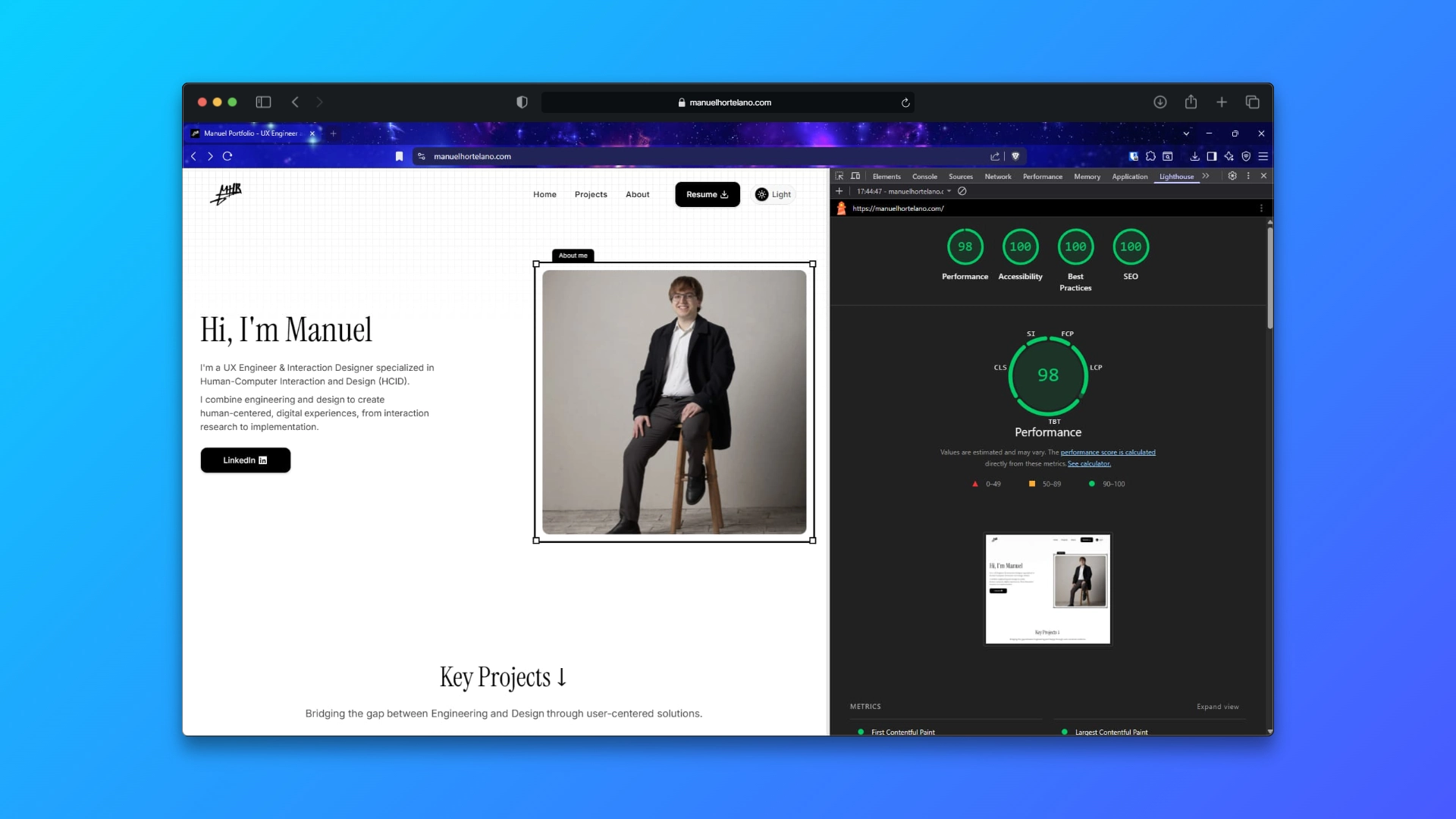
This redesign started as technical debt remediation and became a practical UX engineering program. The site was stable, but weak type contracts, fragmented interaction standards, and limited governance reduced delivery reliability. The target state was clear: preserve Astro performance, formalize quality controls, and make UX, accessibility, security, and analytics behavior auditable in production.
Modern Engineering Workflows: Agentic AI
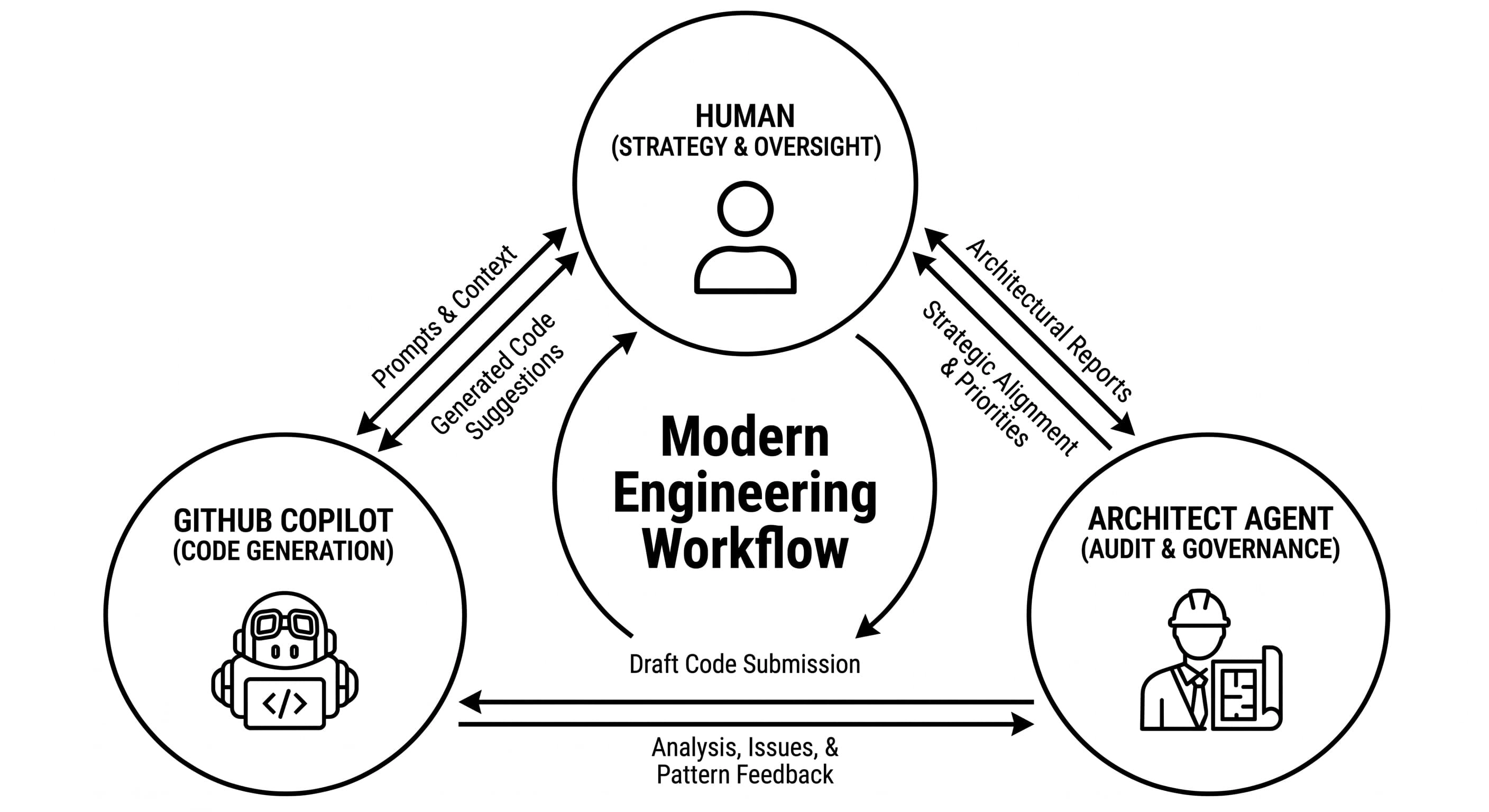
The project uses a Dual-Agent orchestration model as an industry-standard lifecycle for analysis, implementation, verification, and secure release. The objective is execution efficiency with measurable quality, not prompt-level code generation.
- Execution Agent: accelerates dependency mapping, repetitive refactors, and implementation throughput.
- Reasoning Agent: validates architecture trade-offs, reviews risk, and challenges implementation strategy.
- Lifecycle orchestration: planning, mutation, auditing, and release checks are coordinated as one workflow.
- Governance outcome: AI contributes to DevSecOps and A11y audit discipline while maintaining architectural quality.
Storybook as the Gap Bridger: Designer to UX Engineer
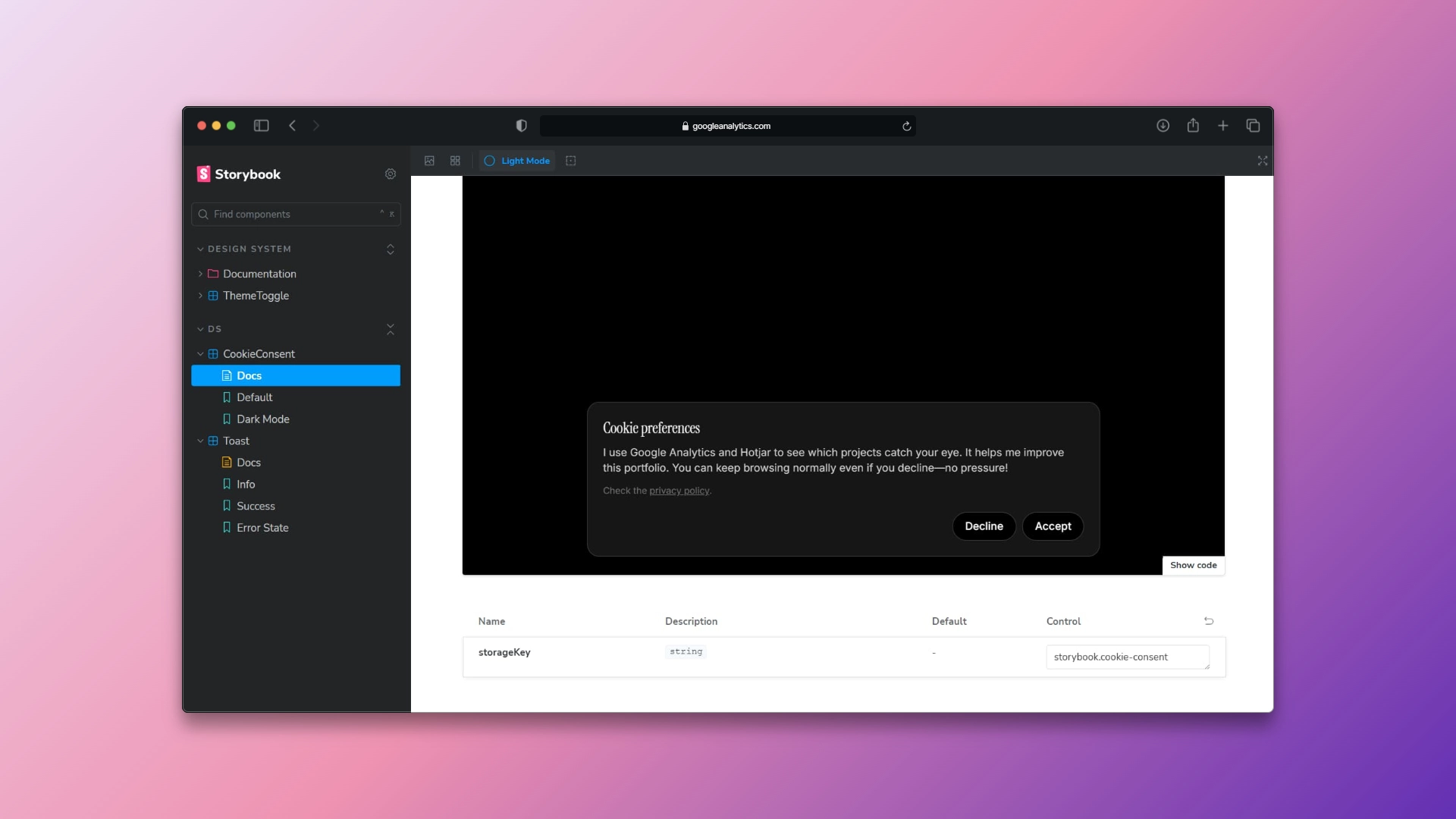
Storybook marked the transition from traditional design deliverables to production-level UX engineering ownership. I moved beyond Figma UI kits and implemented a practical single source of truth with MDX documentation and Preact components. The Design System is currently an MVP tailored for this portfolio, but it is intentionally managed as a living ecosystem under continuous development and refinement.
This is a solo project, but Storybook already functions as a DesignOps Sandbox. In a scaled corporate context, the same structure would reduce interpretation drift by keeping design decisions and implementation behavior in one source of truth.
- MDX contracts: rationale, usage constraints, and edge cases remain attached to component implementation.
- Preact states: interaction behavior is tested in executable components rather than static visuals.
- Design and development alignment: shared component behavior that can potentially scale to different teams.
Frontend Architecture: Enforced Quality Controls
Hard technical and DevSecOps outputs were consolidated under one architecture layer to improve reliability and release predictability. Choosing Preact over React or heavier alternatives was a core UX engineering decision. Preact keeps bundle weight minimal, which protects UX performance, while also providing native compatibility with the official @storybook/preact ecosystem for better developer experience.
- Strict TypeScript contracts: reduced silent regressions and stabilized refactor cycles.
- Vitest contract validation: critical interaction logic was validated in isolated tests to protect behavior integrity.
- Decoupled static deployment (Render): production site and Storybook were deployed as separate static services with independent lifecycle control.
- Accessibility enforcement: ARIA semantics and interaction behavior were treated as release criteria.
- DevSecOps hardening: security attributes, clean build boundaries, and git-history PII purge were applied before publication.
Astro
Preact
TypeScript
Vitest
Data Analytics: Preparing for Data-Driven UX
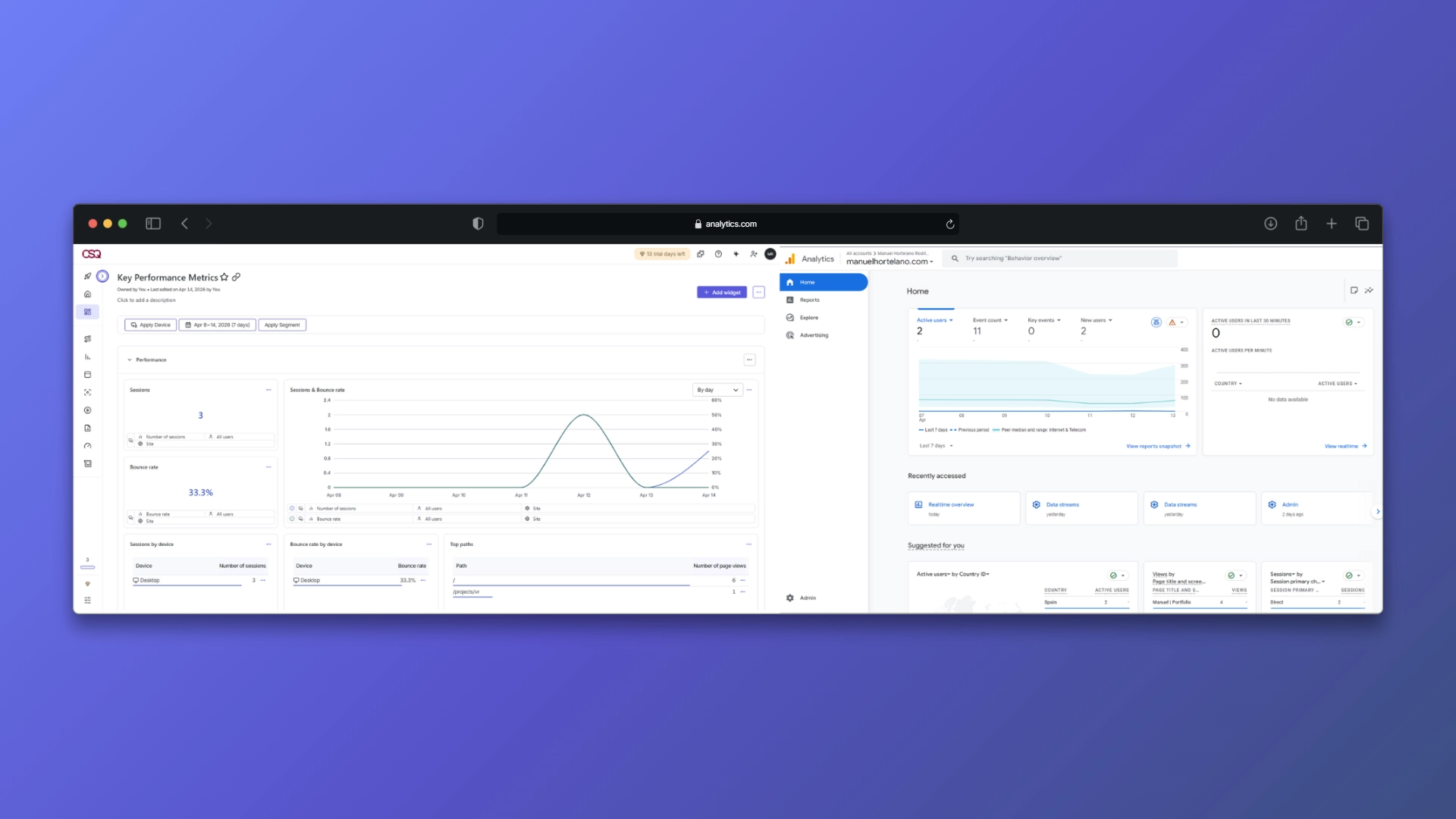
Industry-standard analytics infrastructure was integrated successfully, including GA4 and Hotjar, with consent-aware event flow for behavior tracking. The current traffic volume is still below the threshold required for strong statistical significance, so iteration decisions are not yet driven by these signals. The infrastructure is in place as a future-proof foundation for evidence-based UX optimization.
Validation & Impact
Ethical by Design
Ethical UX
Zero dark-patterns consent architecture, mobile interactions optimized for Fitts's Law, and respectful analytics instrumentation.
Accessibility by Design
100 / 100
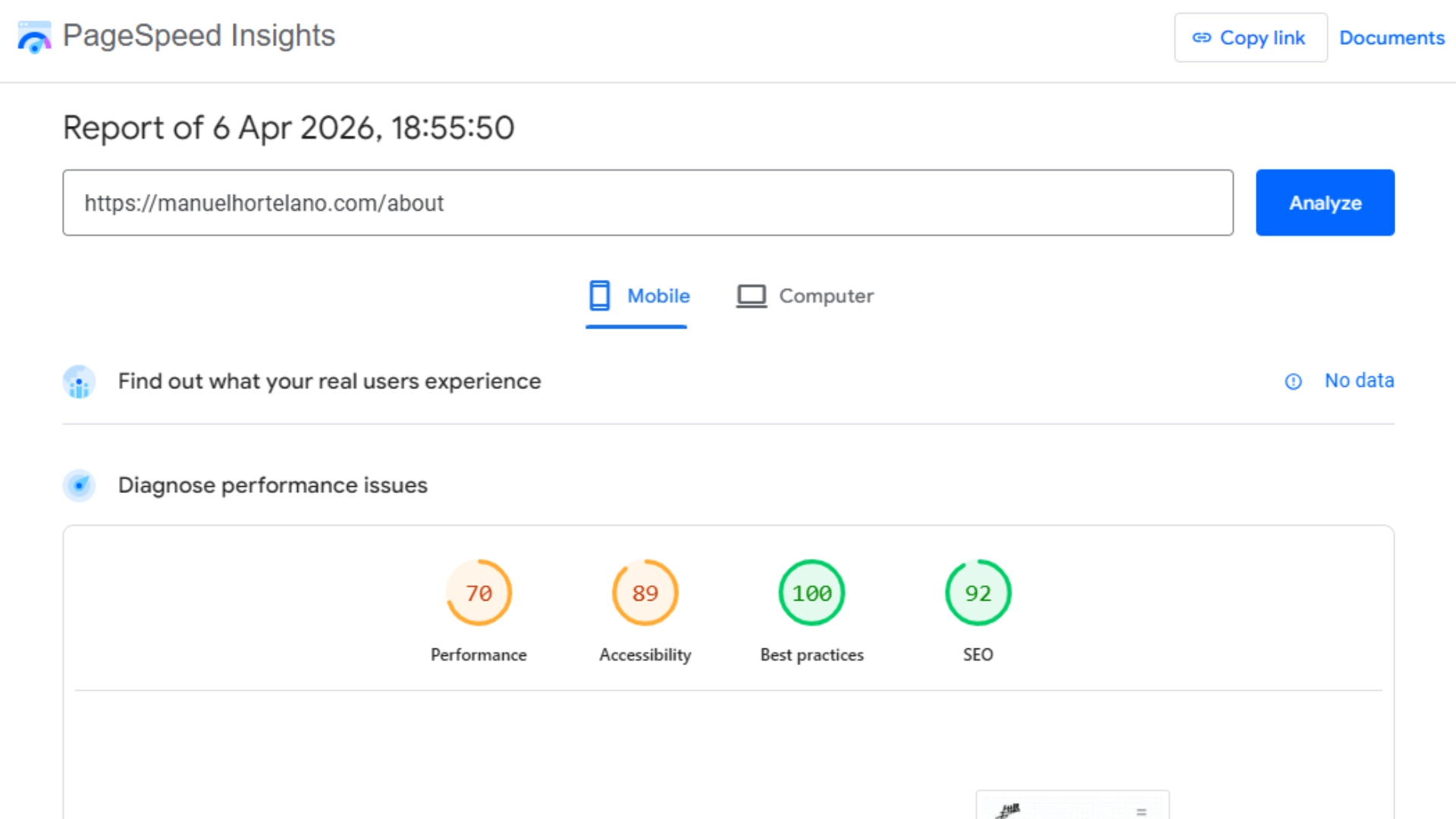
Semantic HTML and ARIA architecture maintain a consistent 100/100 Accessibility score. Dark mode contrast fluctuations are tracked as controlled technical debt.
100 / 100
Performance & Quality
Lighthouse reached 100/100 in SEO and Best Practices, confirming strong performance governance and production quality controls.
0 Errors
Engineering & Security
Zero-error strict TypeScript build, Vitest contract validation, and DevSecOps git-history PII purge were enforced as release gates.