
Overview: User-Centered Food Discovery
Flavor Fiesta is a system designed for food enthusiasts exploring Spain. The platform helps people discover local restaurants, markets, and cooking classes while encouraging social interaction and shared experiences. This project was completed in collaboration with Alex Debertolis and Kristina Todorova as part of a Human-Computer Interaction course, following a user-centered design process from research to validation.
User Research
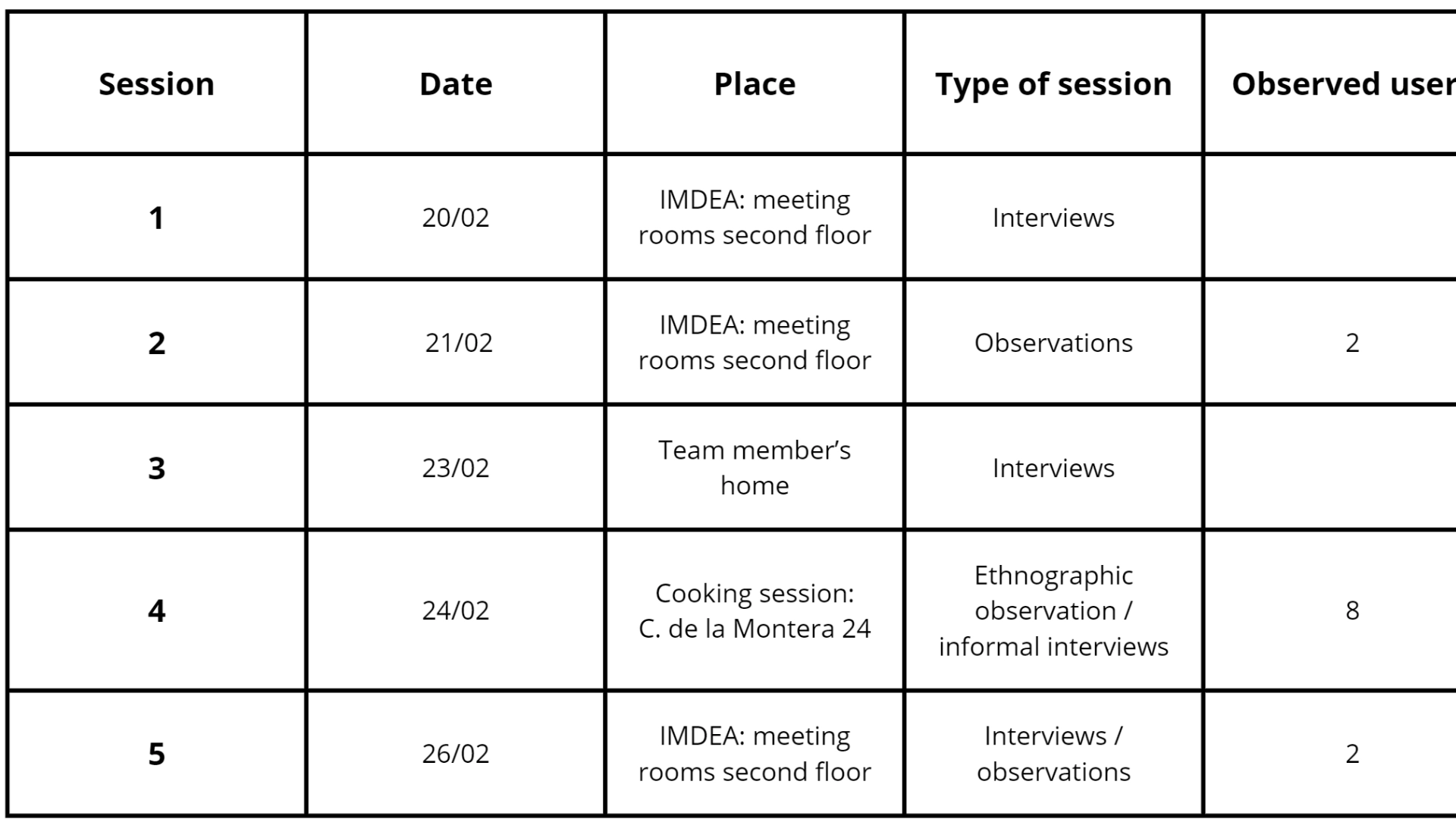
We interviewed seven users, observed four individuals in context, and ran a cooking workshop with eight participants. The focus was to understand how short-term tourists and long-term residents make food decisions and how they trust recommendations.
Read the full research report in the Word document.
User Analysis
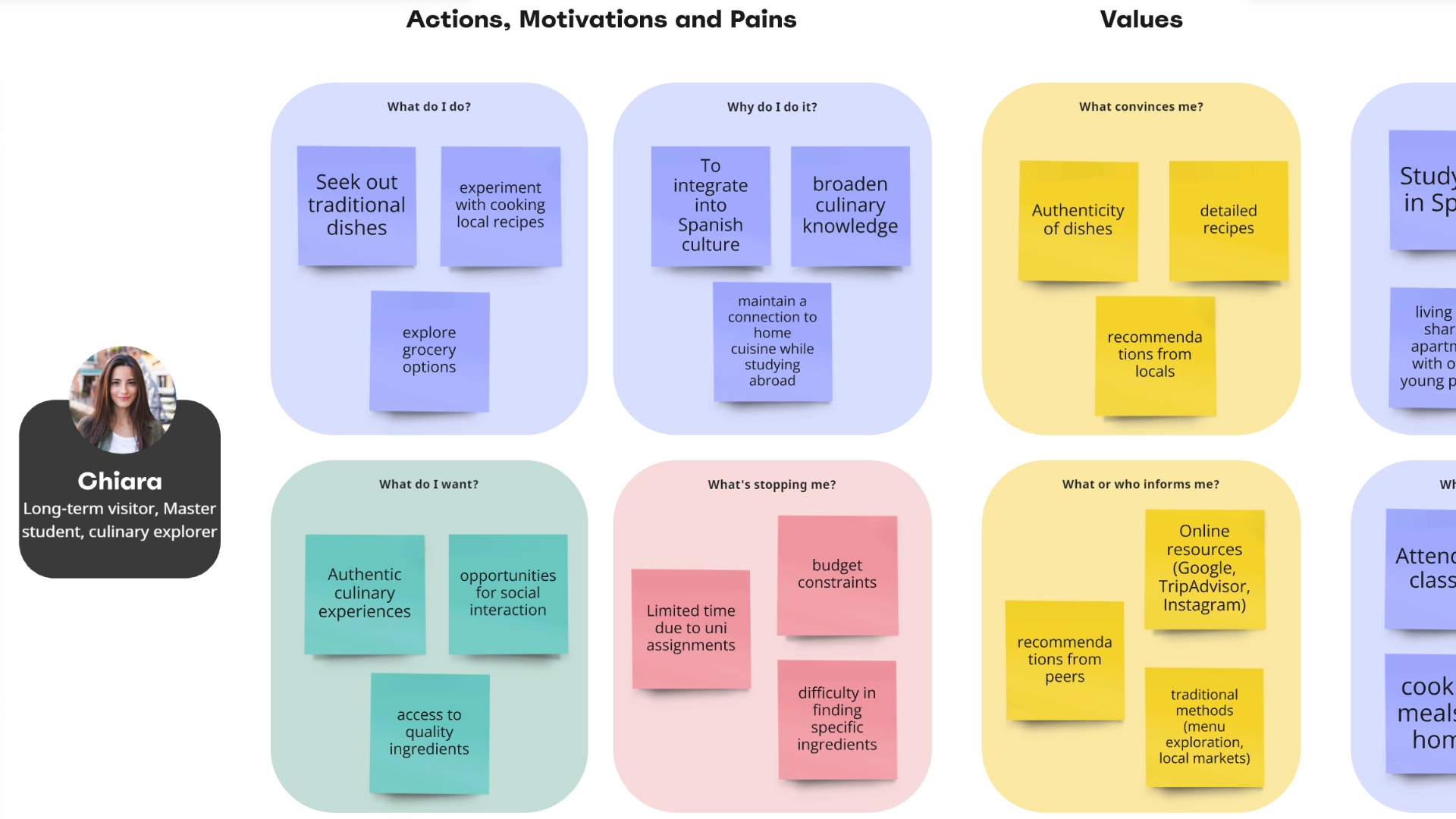
Insights were synthesized into personas and empathy mapping. The analysis highlights actions, motivations, pains, and values that shaped the experience for Chiara (long-term student) and Emily (short-term tourist).
Low-Fi Prototypes
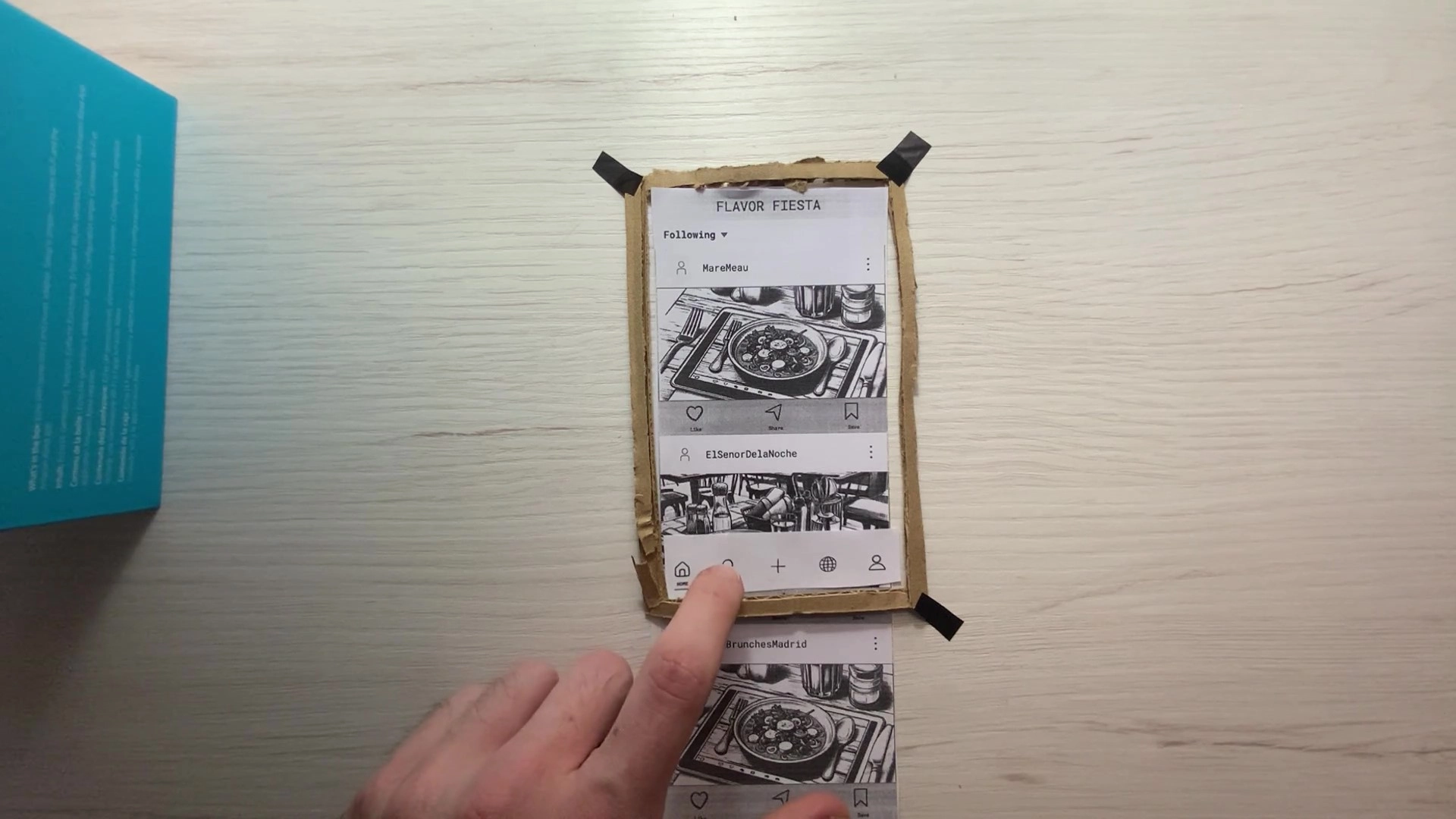
Low-fidelity prototypes in Balsamiq defined the IA and interaction flow before moving into visual design.
See the low-fi report and the prototype walkthrough video.
Hi-Fi Prototype: One Task Flow
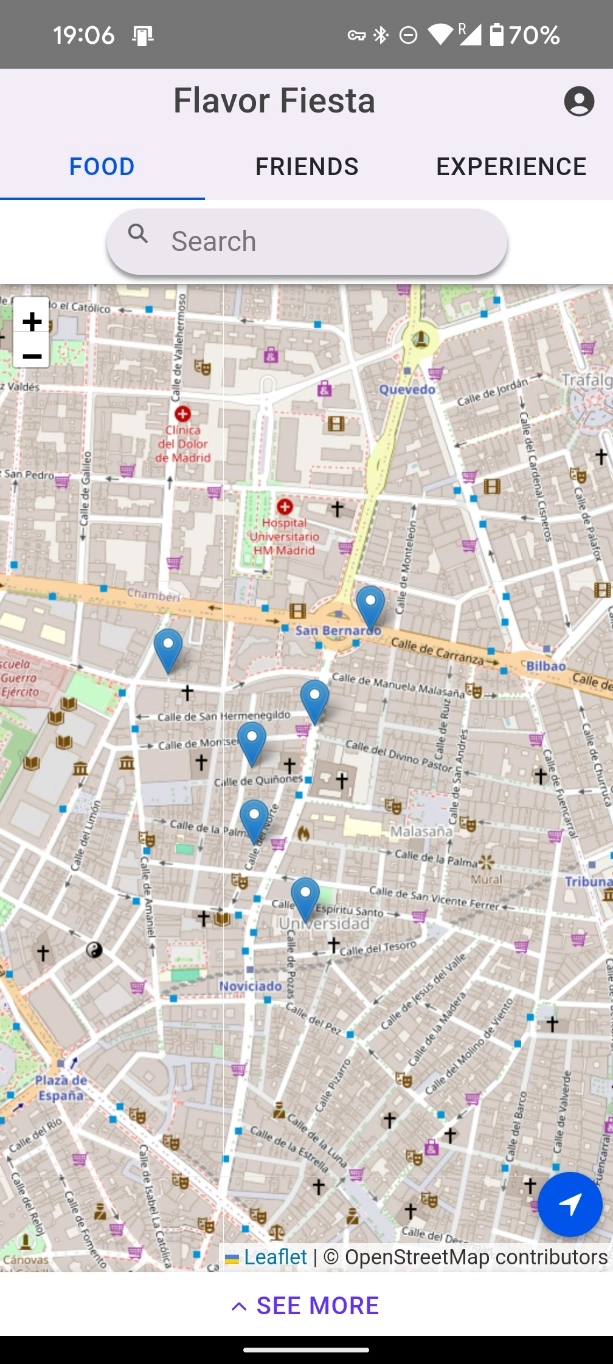
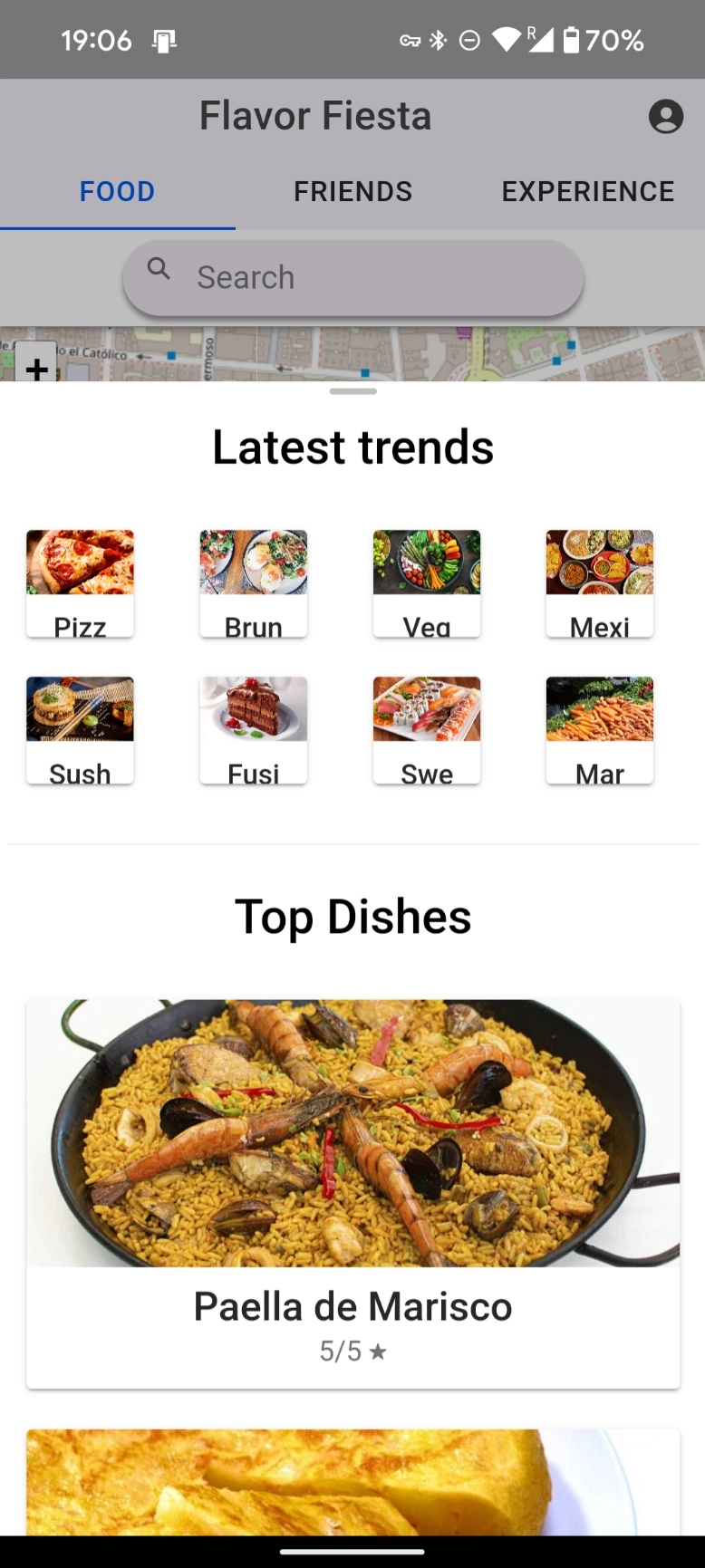
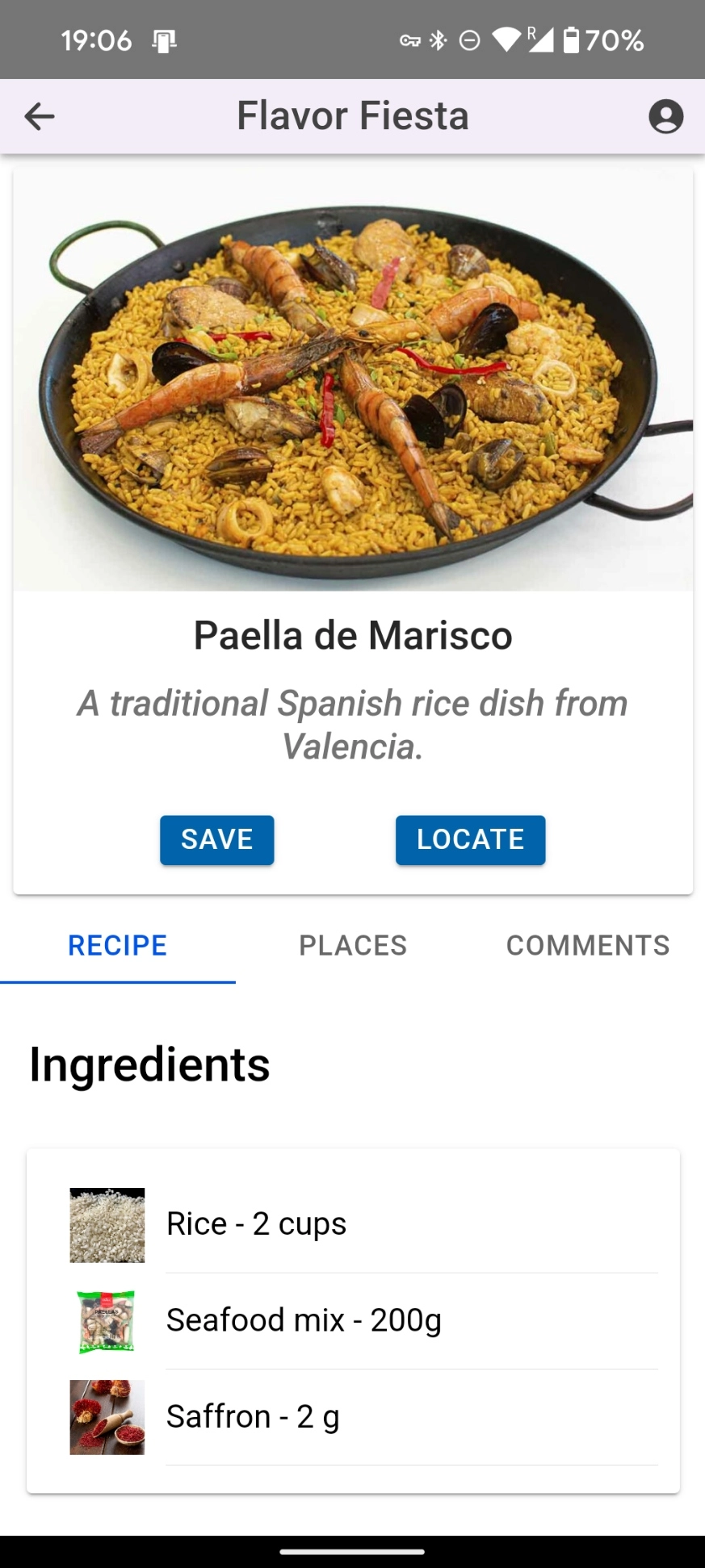
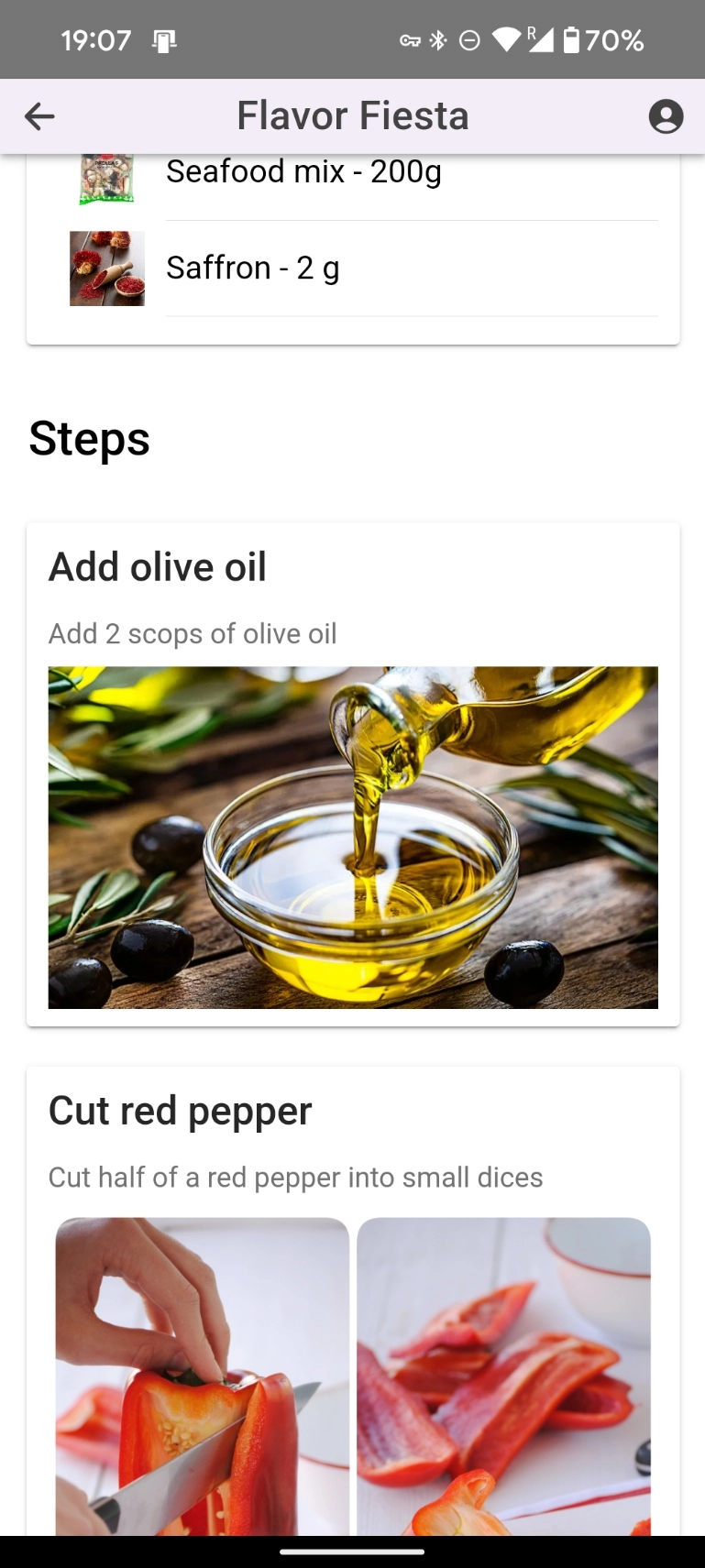
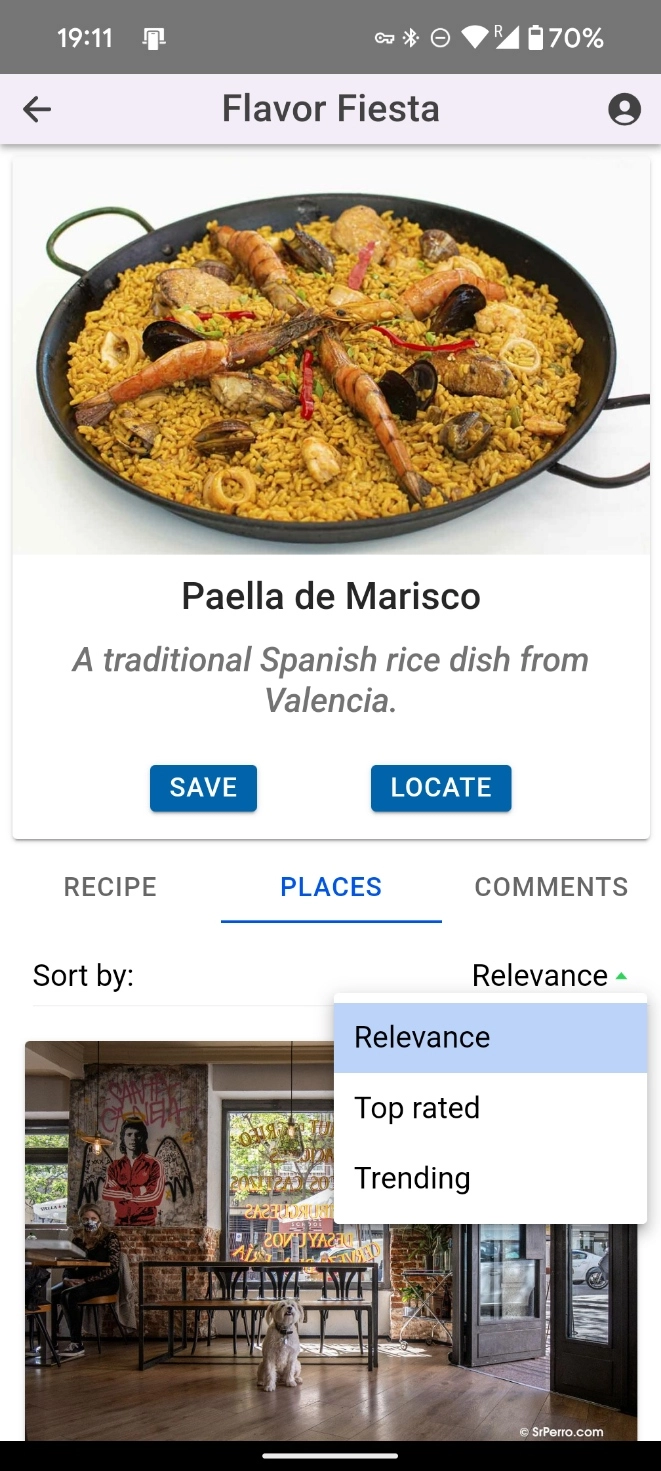
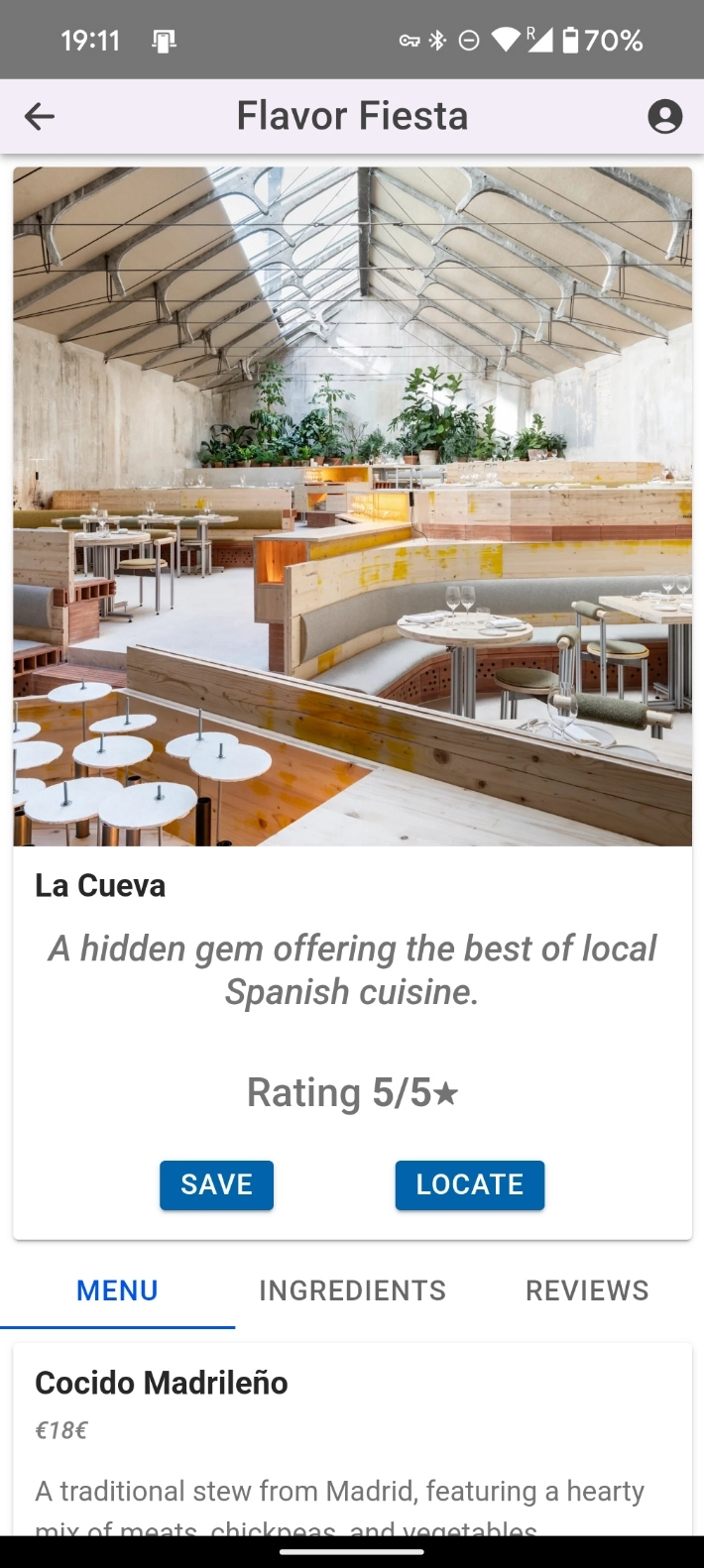
The hi-fi prototype focuses on a single task flow, moving from discovery to selection and detail inspection.
Impact & Validation
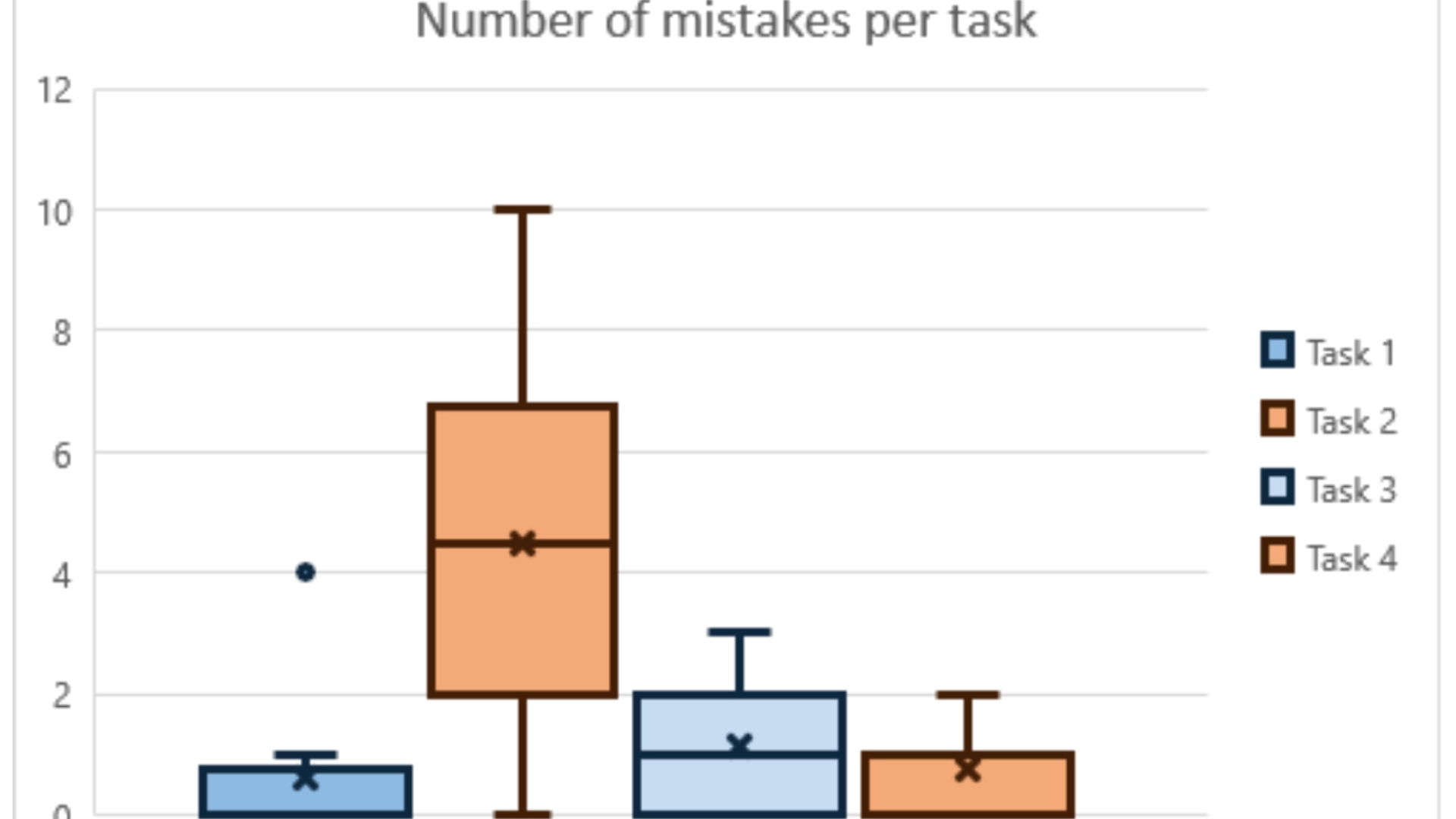
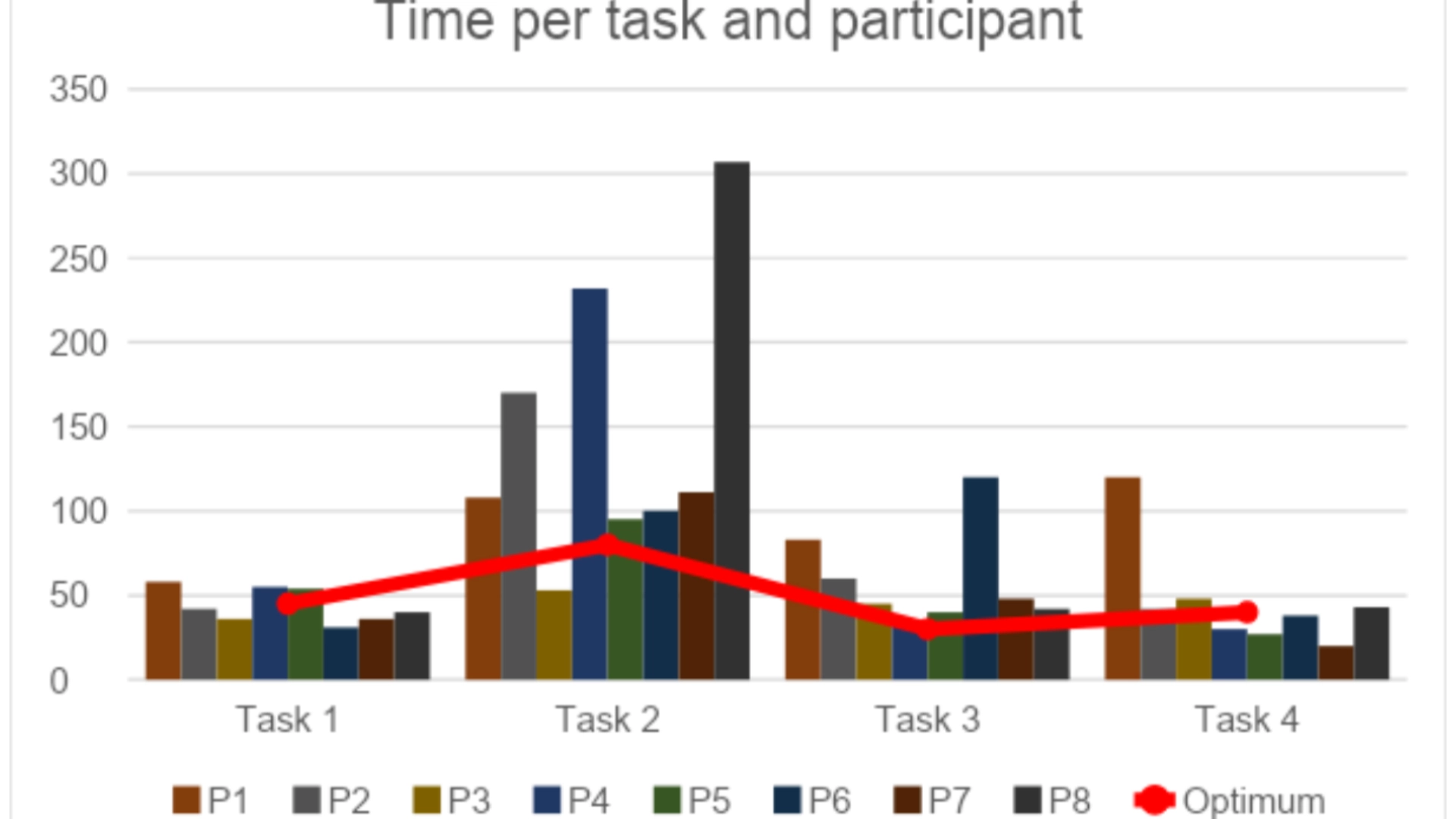
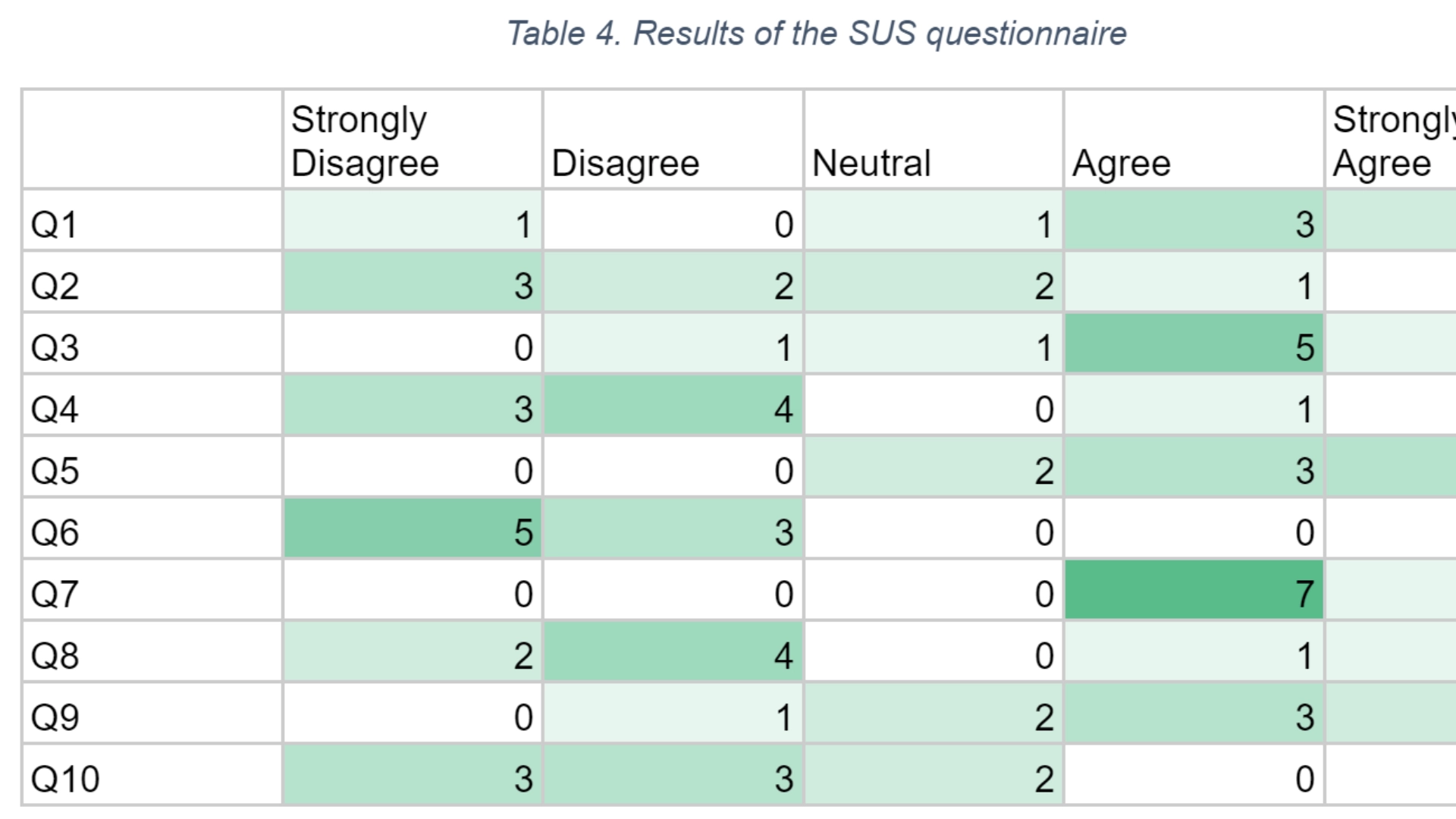
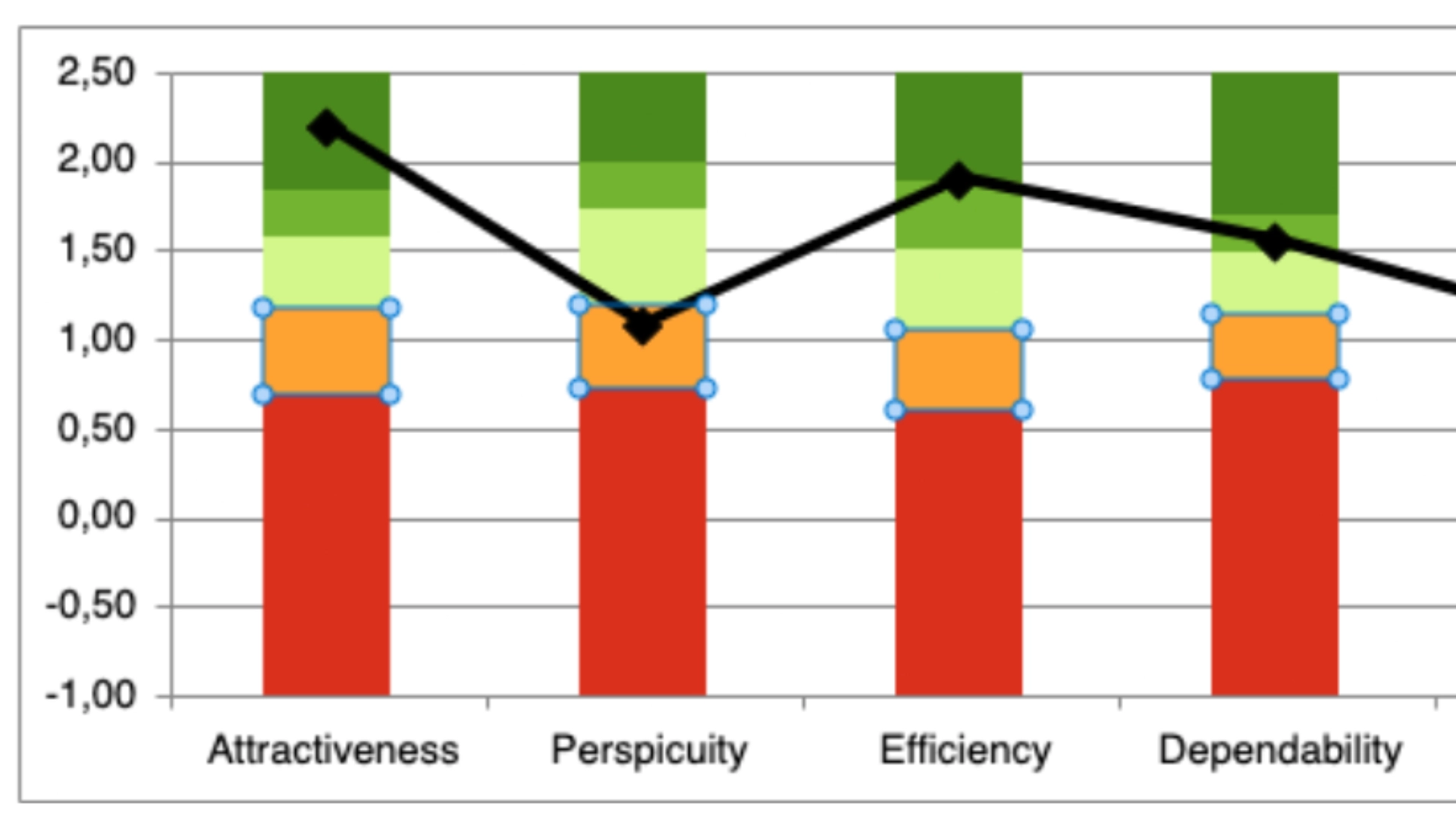
Usability testing on the high-fidelity prototypes resulted in a SUS score of 73.75, indicating good usability with clear opportunities for refinement. UEQ feedback was positive overall, while highlighting design consistency and interactive clarity as improvement areas.
73.75
SUS score
Usability rated as good, with room to reach excellent standards.
UEQ feedback
Positive experience
Strong overall UX with noted issues in design consistency and feature clarity.
Validation details are documented in the usability report.